Skip to content

Brazilian Jiu-Jitsu in Vienna

What is Brazilian Jiu-Jitsu?

Brazilian Jiu-Jitsu (BJJ) is the martial art where technique beats strength. Here’s where BJJ comes from, how it works, what gi, no-gi and the belts are all about – and how to get started at Matte1 by Schwedenplatz in Vienna.

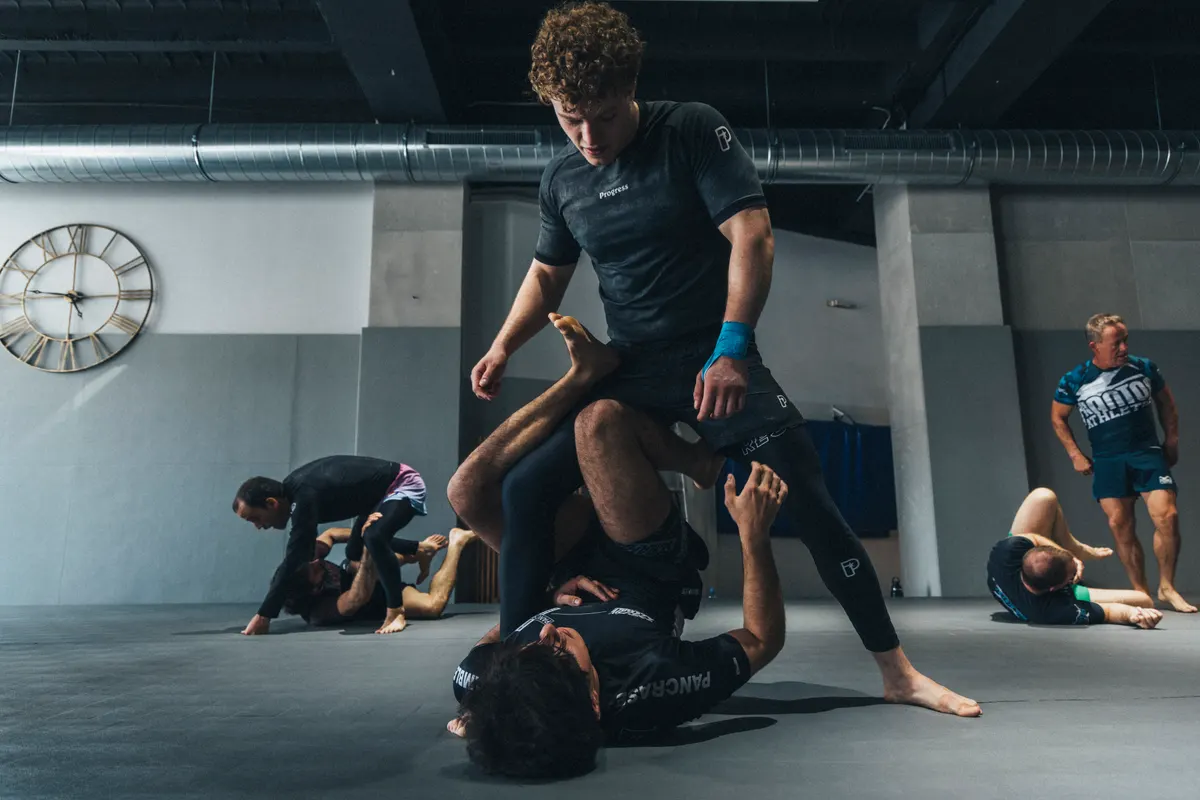
Two athletes training Brazilian Jiu-Jitsu on the ground

Martial art, sport and puzzle in one

Brazilian Jiu-Jitsu – BJJ for short – is a martial art built around groundwork. Instead of punching or kicking, you control your opponent with grips, positions and joint locks until they submit. The core idea: with the right technique, a smaller, lighter person can hold their own against someone bigger and stronger.

BJJ has its roots in Japanese judo and jiu-jitsu. In the early 20th century, judoka Mitsuyo Maeda brought the art to Brazil, where the Gracie family developed it further and focused it on fighting on the ground. Since the first UFC events in the 1990s, BJJ has been known around the world – and today it’s a core part of MMA.

BJJ is self-defense, a full-body workout and a mental challenge all at once. There’s a reason people call it “chess with your body”.
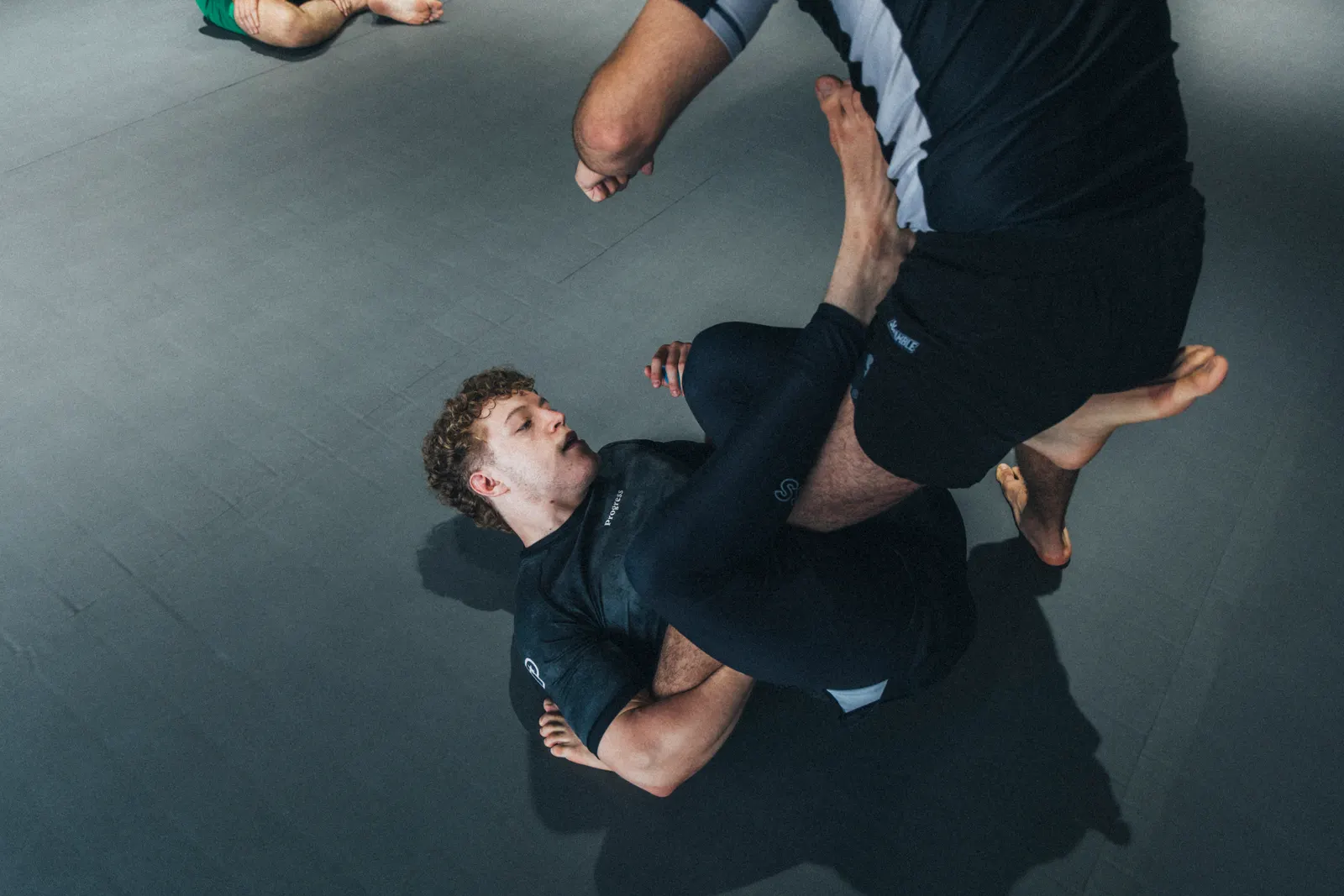
No-gi training: an athlete controls his partner from guard

The principles of BJJ

  • Leverage over strength

    Good technique beats raw power. With leverage, timing and smart use of your body weight, a smaller person can hold their own against a stronger opponent.

  • Position before submission

    Control first, finish second. You learn to reach strong positions and keep them – the joint lock or choke follows from there.

  • Tap, reset, go again

    When a hold gets uncomfortable, you tap and your partner lets go immediately. That’s what makes it possible to train at full intensity and stay safe.

Gi and no-gi

BJJ is trained in two styles – and you’ll find both on the Matte1 schedule.

Gi

You train in the traditional BJJ uniform (gi or kimono). Collars, sleeves and pants give you endless grip options, which makes the game slower, more tactical and very technical. Many consider the gi the best school for clean fundamentals.

No-Gi

You train in a rash guard and shorts. Without fabric to grip, the game gets faster and more dynamic, and takedowns and leg locks play a bigger role. No-gi is closer to wrestling and MMA.

More about no-gi at Matte1 →

The belt system

BJJ has five belt colors for adults, with stripes on the belt marking progress in between. Belts aren’t handed out for a single test – they reflect your skill, experience and attitude on the mats. That’s why the path to black belt usually takes many years.

Kids and teens have their own belt system with extra colors. At Matte1 there’s also a dedicated PRO CLASS for advanced students from blue belt up.

  1. WhiteWhere everyone starts: basic positions, escapes and your first techniques.
  2. BlueSolid fundamentals – you know the key positions and can use them in sparring.
  3. PurpleAdvanced: your own game, transitions and combinations.
  4. BrownRefinement and depth – often helping to coach others, too.
  5. BlackMastery, earned through many years of consistent training.
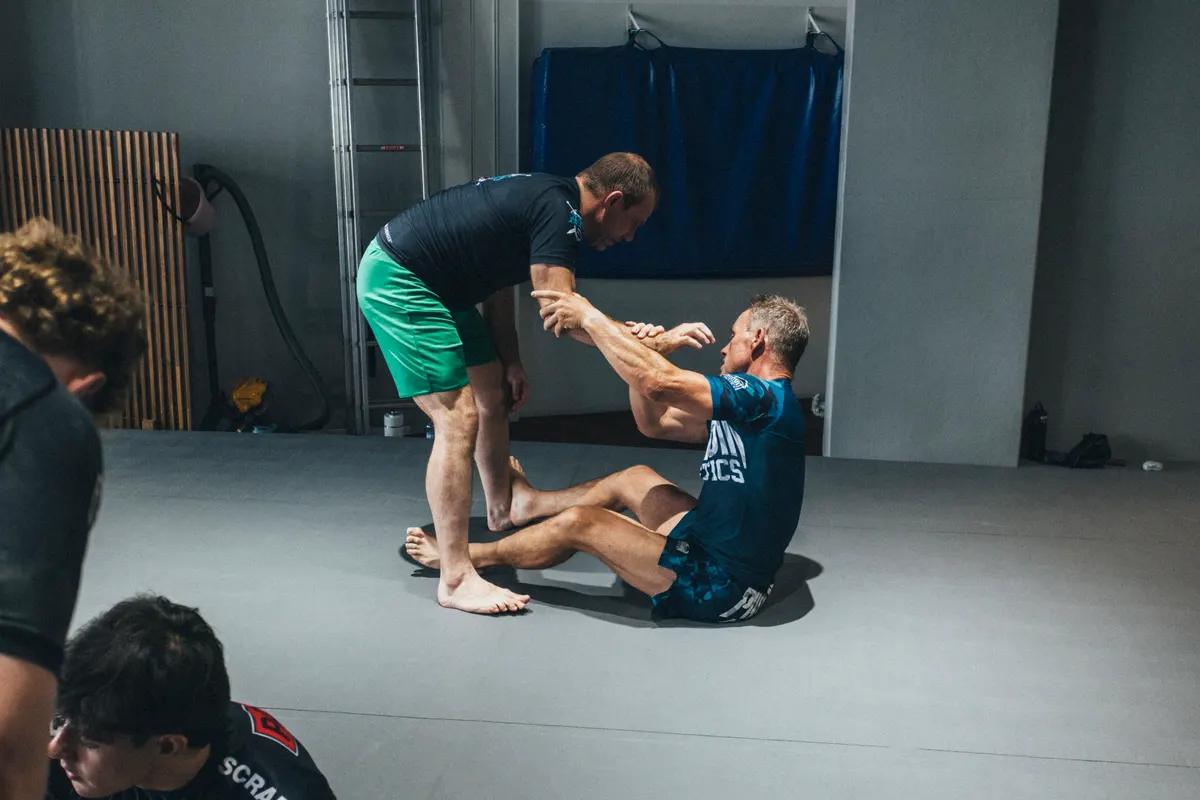
A coach corrects the technique of two students

How you train BJJ at Matte1

A typical BJJ class starts with a warm-up. Then a technique is shown and practiced with a partner (“drilling”). Most classes end with sparring – called “rolling” in BJJ – where you test what you’ve learned against real resistance.

Here are some of the classes you’ll find on the Matte1 schedule:

  • NoGi FundamentalsNo-gi fundamentals
  • Gi Mixed / NoGi MixedClasses with or without the gi
  • Early BirdEarly-morning training before work
  • PRO CLASSFor advanced students from blue belt
  • Positional SparringSparring from specific positions
  • Wrestling for BJJTakedowns and wrestling for the stand-up game
  • NoGi LeglocksLeg lock techniques for all levels
  • Open MatOpen training on weekends
See the current schedule →

Who is BJJ for?

  • Complete beginners

    No experience needed – our beginners course teaches you the fundamentals in 8 weeks, in a fixed group.

    Beginners course →
  • Kids & teens

    Age-appropriate groups for ages 4 to 15, led by Olympic judoka Hilde Drexler.

    Kids classes →
  • Fitness & self-defense

    A full-body workout that never gets boring – and techniques that actually work when it matters.

    Memberships →
  • Competitors

    Competition prep is a fixed part of what Matte1 offers – with experienced coaches in your corner.

    Our coaches →
  • Visitors to Vienna

    Travelling? With a drop-in day pass you can join every class for the day.

    Drop-in →

BJJ FAQ

Do I need experience or to be fit already?

No. Fitness and mobility come with training. The beginners course is the perfect way in – you start from zero alongside other beginners.

Is Brazilian Jiu-Jitsu dangerous?

BJJ is trained in a controlled way: there’s no striking, and when someone taps, their partner lets go immediately. As with any contact sport, look after your partner and build up at your own pace.

How often should I train?

Train two or three times a week and you’ll notice a real difference within two to three weeks – in your fitness, flexibility, confidence and technique.

What’s the difference between gi and no-gi?

In the gi you wear a uniform and can grip collars and sleeves, which makes the game more tactical. No-gi is trained in a rash guard and shorts – faster, and closer to wrestling and MMA. Matte1 offers both.

What age can you start BJJ?

At Matte1, kids classes start from age 4, with groups for ages 4–7, 8–11 and 12–15. For adults, there’s no upper age limit.

What do I need for my first class?

For your trial class, sportswear and a towel are all you need. If you stick with it, you can buy a quality gi (BJJ uniform) right at the gym.

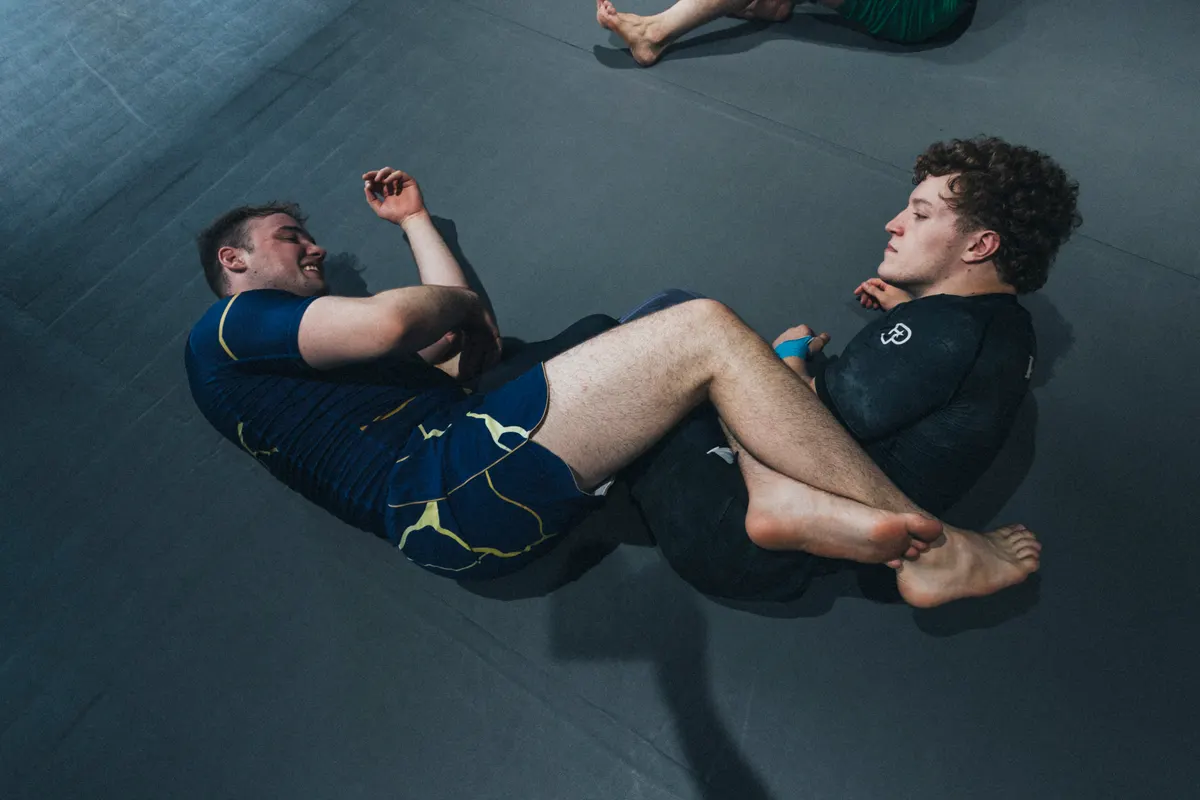
Sparring on the mats at Matte1 in Vienna

Try BJJ for yourself

Come to a trial class at Matte1 – just bring sportswear and a towel. We’ll get back to you within 24 hours.

Rather call? +43 664 456 55 54

Book a trial class